
The Importance of Curiosity and Experience, Part I
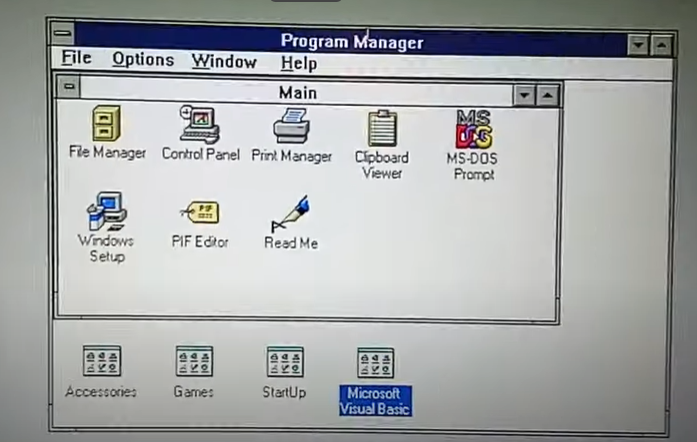
Windows 3.1
Source: Wikimedia

I started using computers before mice were common: first on a VIC-20, then a Commodore 64, and later DOS. When Windows 3.x arrived, I continued to use the keyboard as my primary way to control the computer.
One day I discovered that pressing Alt+Space opened the window menu. Being curious, I tried the different options and found that selecting Move allowed me to move a window with the arrow keys. I also discovered that after pressing an arrow key, the window would attach to the mouse pointer, allowing me to position it with the mouse.
It wasn’t a big discovery, and it wasn’t particularly useful. After all, you could simply click the title bar and drag the window wherever you wanted.
Then one day, when changing screen resolutions, one of my windows got lost. Switching to a higher resolution didn’t bring it back, nor did restarting the application, since it reopened exactly where it had been closed. Because the title bar was off-screen, I couldn’t click and drag it back into view.
That’s when I remembered my discovery.
I pressed Alt+Space, selected Move, pressed an arrow… and there was my window, attached to my mouse. Window saved! I could compute some more!
Even today, under Windows 11, I still get calls about “my window is missing!” This often happens after changing monitor configurations (such as when moving between office and home setups), disconnecting a display, or changing resolutions. To many users, it looks like the application is missing.
The fix is the same one from Windows 3.x, just updated for how Windows 11 displays windows as previews:
1. Hover over the application’s icon on the taskbar until the window preview appears.
2. Right-click the preview and select Move.
3. Press any arrow key.
4. Move the mouse.
5. The hidden window will attach to the pointer and reappear on-screen.
6. Position it where you want.
The lesson wasn’t about hidden Windows shortcuts. It was about curiosity and experience.
Years earlier, I had spent a few minutes exploring a feature for no particular reason. When an unusual problem appeared later, I already knew the solution.
Experience is often nothing more than a collection of small discoveries that seemed unimportant at the time.